

History · Chapter 9 of 10
Arts, Drama and Clubs
A university drama school, amateur theatre clubs, portrait painters, a study circle and football on the Netaji Ground. Aranattukara's long love of the stage and the playing field.
Thrissur likes to call itself the cultural capital of Kerala, and Aranattukara has done its share to earn the name. Long before a university drama school opened at Lalur, the parish, the temples and the reading rooms of Aranattukara were putting on plays. Young men acted the women’s parts, painters built the sets, and whole families bought tickets. This chapter collects what the book remembers of that stage life, of the painters, of a lively study circle, and of the playgrounds where the same young people spent their evenings.
A club named after Athens
The book traces organised drama in Aranattukara to the Athaneeyam Club, started in 1942. Its name echoes the Athenaeum, the temple of learning in ancient Athens. The club met in a house at Thoppinmoola that had belonged to A.C. Lona Master. He had been dismissed as headmaster of the church school in 1928 for publishing a book arguing that there is no God, and he died of tuberculosis a few years later. The book sees the club’s unusual name as a sign that Aranattukara already had its share of independent minds. The club’s best-remembered production was Meridasan.
Troupes, parishes and temples
In the 1960s Romulu Theatres, on Convent Road, staged a new social drama every year and took bookings to perform elsewhere. It brought in well-known actresses from outside, among them Thrissur Philomina, Mavelikkara Rajamma and Thrissur Elsy. Plays from this time included Njangal Varunnu (“We Are Coming”), Muttathu Varkey’s Ottakavum Soochikkuzhalum (“The Camel and the Eye of the Needle”) and C.L. Jose’s Maanam Thelinju (“The Sky Has Cleared”). C.L. Jose also wrote one play he never published, given the tense political mood of the time. It was performed at the Government U.P. School.
The parish had its own companies: the Minerva Arts Club, Marian Theatres and St. Sebastian’s Arts Club. Audiences bought tickets and crowded into the open-air auditorium at St. Thomas Church. Female roles went either to actresses hired from outside or to local men, and the book singles out a performer known as Panchaman. Most of the plays were social or musical dramas. Older listeners still remember the songs of Anthu Chirayath and the music of John Kokkan.
Other stages were busy too. The Lalur Service League and the S.N. Samajam staged plays, and there was a drama competition every year at Shivaratri. At the Calvary Ashram the Capuchin friars produced Biblical and social plays under the name Assisi Arts. Even earlier, C.C. George Master and C.O. Kochudevassy had put on English plays, including Julius Caesar and Shahjahan. Kochudevassy built tall, ambitious sets for them.
Later productions included T.G. Ravi’s Manalkkadu, Sam Thom Arts’ Agnipralayam and more plays by C.L. Jose. The book names more than twenty local actors and stage hands, from K.T. Johny and N.D. Cheru to C.K. Johny, and admits the full list would be much longer. Aranattukara also had performers of chavittu natakam (the Latin Christian musical dance-drama). One of them, Karapparambil Kittunni, was in demand on stages far from home.
The School of Drama
In 1977 the University of Calicut opened its School of Drama and Fine Arts on the green campus of the Dr John Matthai Centre at Lalur. Its first director was Prof. G. Sankara Pillai, a leading figure in modern Malayalam theatre. Buses did not come close then, so he would get off on Kanjani Road and walk in along the cemetery road with a cloth bag on his shoulder, usually talking with whoever walked beside him. Later directors included Dr Vayala Vasudevan Pillai and Prof. Ramanujam.
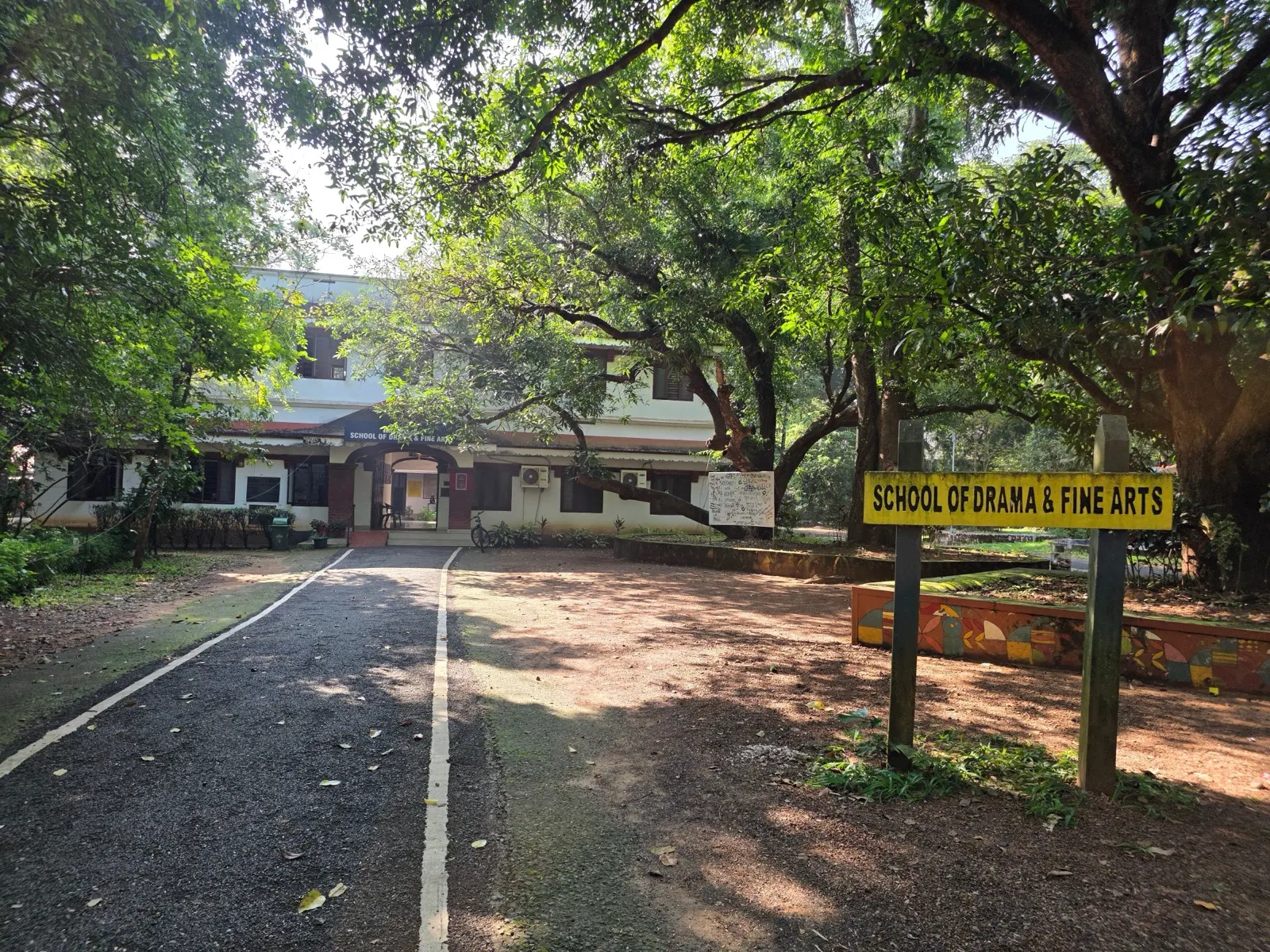
The school trained many people who went on to work in Malayalam theatre, film and television. The book mentions actor Balachandran, director Ranjith, Jose Chiramel and Jayaraj Warrier. Greek and European classics and Indian theatre were performed in its open-air theatre. The book credits the school with raising the standard of theatre, and the cultural confidence, of Aranattukara and of Thrissur as a whole.
Painters of the old days
Before photography was common, a family that wanted a likeness of a parent or grandparent commissioned a painted portrait. C.D. Raphael and C.K. Sebastian painted most of the portraits that hung in Aranattukara homes. Raphael was also a sculptor, and he kept painting even after his eyesight failed and his hands began to shake. Chalissery Philipose was known for working fast on large canvases, and he painted much of the scenery for the plays of the day.
The Mathrubhumi Study Circle
The Mathrubhumi Study Circle was an independent group of young people with literary interests. They met at the home of Prof. O.J. Antony, Principal of St. Aloysius College and a scholar of English. The socialist writer Vincent Puthur was its coordinator. The circle wrote and staged its own plays. Puthur’s Parithranam, directed by John Kokkan, won second place in a district drama competition at the Regional Theatre in Thrissur. Agnihothram, a musical drama by Prem Joy Aranattukara about life under the Emergency, was directed by C.P. Devassy and performed in the church’s open auditorium.
The playgrounds
The parish built playgrounds for both the East Church and the West Church, and young people from both played tennis and basketball on them. During the years of the church dispute, Chakkoru Master bought land behind the East Church so that the parish’s young people could play together and leave the quarrel behind. It was a tennis court for a while and later became the church school’s playground, known locally as the Pattapparambu.

Football belonged to the Netaji Ground. The Netaji Sports Club, run from a shed at Thoppinmoola, organised tournaments there. The Cochin Malleables factory team once held Punjab Police to a draw and reached the pre-quarter-finals of the Chakkola Trophy. C.T. Raphael Chungath played under the name “Sakthan”, and P.R. Antony went on to play for Bombay Caltex. The book lists many more players, including a long line from Tharakan’s School, and notes that new names are still being added.
Do you have a programme, a ticket or a photograph from an Aranattukara play or tournament? We would love to see it.
Sources
- Joy Chiramel, Arranadu – Aranadu – Orunadu (2024), ch. 14 (drawing on information collected by Vincent Puthur and K.T. John)
- Joy Chiramel, Arranadu – Aranadu – Orunadu (2024), ch. 16
Places and people in this story

Dr John Matthai Centre, Lalur
The University of Calicut campus at Lalur, on the green estate where John Mathai lived, home to the Department of Economics and the School of Drama.

Calvary Ashram, Poothole
A Capuchin friary at Poothole, founded in 1954, known for retreats, youth camps, social work, drama and a college of philosophy.

St. Thomas Church, Aranattukara
The parish church at the heart of Aranattukara, whose story runs from a first church in 1796, through a long division, to reunion in 1964 and the church we see today.

St. Aloysius College, Elthuruth
The CMI college at Elthuruth, which grew from a small boarding school for boys opened beside the monastery around 1889.

Tharakan's School, Aranattukara
The parish school beside St. Thomas Church, which grew from a village writing school into Tharakan's High School and taught generations of Aranattukara children.
Netaji Ground
Aranattukara's football ground — home of the Netaji Sports Club's tournaments, and the field where local players and the Cochin Malleables team made their names.